Teaching Kindergarten
Get this and the rest is easy...
When teaching kindergarten, always use concrete materials. Children learn best when given things, objects, stuff to learn with (called “concrete objects or manipulatives”in the education world).
Children need multi-sensory experiences when learning new ideas and concepts.
There are many great educational learning supplies and materials available to teach geometry, number sense, pattern skills, symmetry, classification and other math concepts.
For more information on this topic read, "Teaching with math manipulatives".
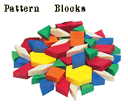 Use science materials like magnets, light paddles, scales, weights, and collections of birds' nests, book characters and puppets to enhance literacy, and math materials such as pattern blocks, counting objects, geometric blocks; use
Children learn in lots of different ways
Learning styles research tells us that children learn in many ways. Visual learners watch closely when you demonstrate an activity and like to draw and play with shapes and puzzles.
Auditory learners understand ideas and concepts because they remember information they have heard, follow spoken directions well and remember songs easily.
Although all children learn through touch, some learn especially well through touch and movement (tactile/kinetic learners). Some children like structure and some learn more easily in an unstructured environment.
When teaching kindergarten be aware of learning differences and offer a variety of activities and experiences.
If you want your children busy, happy and on task, give them lessons that offer a variety of kindergarten teaching ideas, different opportunities to learn, and things to touch and discover.
Present concepts in a structured step-by-step way
When concepts are presented in a structured step-by-step process with each step building on previous knowledge, children learn with less effort.
Expecting a young child to understand the concept of a food chain without previous experiences with, and vocabulary about, chains and links is assuming too much.
Offer step-by-step structured activities and experiences to help kids learn when teaching kindergarten.
During my first teaching practicum I was asked to teach young kids about the metric system. I thought I did a great job. After the class, my wise, experienced mentor said, "That was great. Now take everything you just taught them and spread it over a three week period!"
Kindergarten Teaching Pages
Page 1: Understand how young children learn.
- Always use concrete materials to teach little kids
- Children learn in lots of different ways
- Present concepts in a structured step-by-step way
- Thematic units make learning interesting
- Learning is developmental
- Practicing concepts and skills does not need to be dull and repetitive
- Be flexible and understanding with young children
- Motivate with enthusiasm and curiosity
- Help children describe what they’ve learned
- Take lots of breaks