What are tide pools?
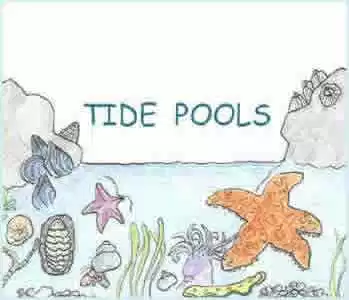
Tide pools are rocky pools filled with seawater near oceans. They can be small, shallow puddles or huge, deep holes. These habitats are called tide pools and are filled with many plants and animals. Although this environment is complex, young children can focus on learning characteristics and names of a few tide pool animals and are fascinated by the variety of plants and animals that live in tide pools.
If you are fortunate enough to live by the ocean, tide pools are a wonderful environment to teach about an ecosystem. It’s easy to get young children to pay attention when they are presented with real things. Studying a real tide pool or a collection of dead, dried tide pool organisms keeps children interested much more than learning about the ocean with an abundance of worksheets, books and videos. The information in this theme is geared for preschool, kindergarten and primary students but is adaptable for older students too.
What should I teach?
The focus of a theme about tide pools in elementary education is:
- to teach observation skills
- to help children describe and record what they have observed
- to help children observe similar and different characteristics of a few tide pool animals and plants
- to help children understand the needs of tide pool organisms and how they depend on one another to survive
- to help children respect and take care of plants and animals when visiting a tide pool
- to teach children the common names of tidepool plants and organisms after they have had plenty of time to make their own observations and descriptions
Tips for teaching about organism that live in tidepools
Complete skills list for environmental education activities…
Other tide pool information:
- Between tides, some of the smaller pools become too warm and begin to dry up.
- Tide pool animals have to be able to survive in both wet and dry conditions.
- Many of the animals hide under cool, damp rocks and moist seaweeds so that their bodies do not dry out before the tide comes in again.